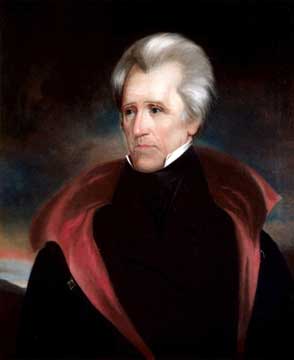
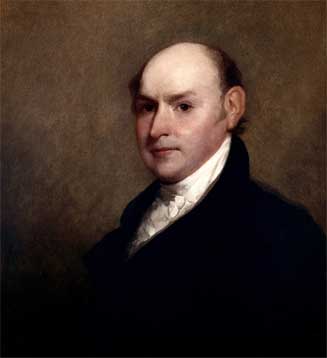
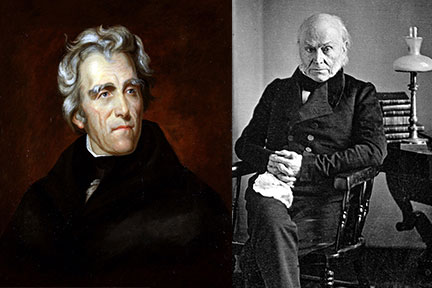
The election of 1828 was a rematch of the contest of 1824, when Andrew Jackson had won the most popular and electoral votes but fell short of a majority. The decision had then gone to the House of Representatives, which chose John Quincy Adams — after Henry Clay threw his support behind him. When Adams promptly named Clay his Secretary of State, Jackson's supporters cried "corrupt bargain," and Jackson began campaigning for 1828 almost immediately.
By 1828, the political landscape had changed. Most states had done away with the property requirement for voting, vastly expanding the electorate. The followers of Jackson organized themselves into a new and disciplined political party — the Democrats — built around their candidate and his appeal to the ordinary citizen.
The Dirtiest Campaign
The campaign of 1828 was one of the most vicious in American history. There were almost no issues of substance dividing the candidates; instead, the contest was fought almost entirely on personal attacks. Supporters of Adams accused Jackson of being a murderer, a gambler, and an adulterer — charging that he had knowingly lived with his wife Rachel before her divorce from her first husband was final. The attacks on Rachel wounded Jackson deeply.
Jackson's supporters gave as good as they got, accusing Adams of corruption, of aristocratic extravagance, and even of having procured a young woman for the Tsar of Russia while serving as American minister there.
A Decisive Victory
When the votes were counted, Jackson had won a sweeping victory — taking 178 electoral votes to Adams's 83, and a commanding majority of the popular vote. His support was strongest in the South and the West, while Adams held New England. It was the first time a candidate had been swept into office on a wave of popular enthusiasm, and it marked a turning point: power was passing from the established elites of the eastern seaboard to a broader democratic electorate.
The reign of "King Mob" seemed triumphant.
Justice Joseph Story, on Jackson's raucous inauguration
The victory was darkened by tragedy. Rachel Jackson died suddenly in December, before her husband took office. Jackson was convinced the brutal attacks of the campaign had hastened her death, and he never forgave his opponents. He entered the White House a grieving widower — but also the most powerful popular leader the nation had yet produced.