Langley's Aerodrome Model Flies
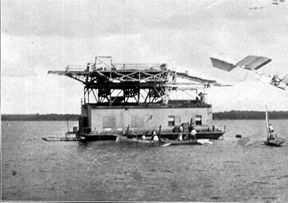
On May 6, 1896, Samuel Pierpont Langley, Secretary of the Smithsonian Institution and a respected astronomer and physicist, achieved one of the first sustained flights by a powered, heavier-than-air craft. His unmanned model, which he called an Aerodrome, was launched by catapult from a houseboat on the Potomac River near Quantico, Virginia.
Powered by a small steam engine, Aerodrome No. 5 flew under its own power for over half a mile in a long, gradually descending arc, far surpassing anything earlier model builders had managed. The physicist Alexander Graham Bell witnessed the flight and publicly attested to its significance.
Langley's success demonstrated that mechanical flight was physically possible and lent scientific credibility to the pursuit. It encouraged further investment in aeronautics, including Langley's own later, unsuccessful attempts to build a piloted version. Though the Wright brothers would achieve controlled manned flight in 1903, Langley's powered models stand as an important milestone on the road to the airplane.