Eugene Ely Makes the First Shipboard Landing
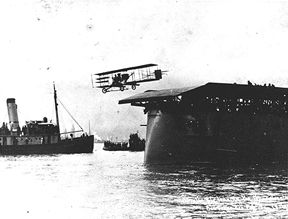
On January 18, 1911, the civilian aviator Eugene Ely made the first landing of an aircraft aboard a ship. Flying a Curtiss biplane, he set down on a temporary wooden platform built over the stern of the armored cruiser USS Pennsylvania as the warship lay at anchor in San Francisco Bay.
To stop the lightly built aircraft in the short distance available, the deck was rigged with a series of ropes weighted with sandbags. Hooks fitted to the airplane caught these lines as it touched down, arresting its roll, a crude but effective forerunner of the arresting-gear systems used on aircraft carriers ever since. After a pause, Ely took off again from the same platform.
Coupled with Ely's earlier takeoff from the cruiser USS Birmingham a few weeks before, the landing on the Pennsylvania proved that aircraft could both depart from and return to a ship. These pioneering flights laid the conceptual groundwork for naval aviation and, ultimately, for the aircraft carrier as the dominant capital ship of the twentieth century.