The Creek War
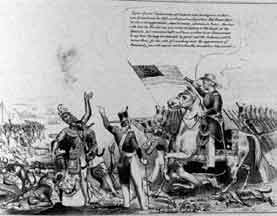
The Creek War erupted from a civil war within the Creek (Muscogee) Nation itself, between the Red Sticks—a faction inspired by Tecumseh's call for resistance and cultural renewal—and Creeks who favored accommodation with the United States. It quickly became entangled with the War of 1812. After Red Stick warriors attacked Fort Mims in present-day Alabama in 1813, killing hundreds of settlers and mixed-race Creeks, the United States and its allies mobilized for a devastating campaign of retaliation.
An army of Tennessee militia under Andrew Jackson, joined by Cherokee and allied Creek warriors, marched into Creek country and crushed the Red Sticks at the Battle of Horseshoe Bend in March 1814, where some eight hundred warriors were killed. In the Treaty of Fort Jackson that followed, Jackson forced the entire Creek Nation—including the Creeks who had fought alongside him—to cede roughly twenty-three million acres, more than half of their remaining homeland. The war made Jackson a national hero, propelling the career that would later carry him to the presidency and to the policy of Indian Removal.