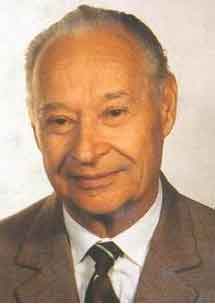
Alexander Dubček was the Czechoslovak Communist leader who gave his name to the "Prague Spring," the hopeful 1968 experiment in liberal reform that was crushed by Soviet tanks. Born in Slovakia, he spent much of his childhood in the Soviet Union, where his idealistic parents had moved, and returned to take part in the wartime resistance before rising steadily through the Communist Party.
In January 1968 Dubček became the party's first secretary, and he set out to create what he memorably called "socialism with a human face." His reforms relaxed censorship, permitted open debate, rehabilitated victims of past purges, and promised greater democracy and freedom — releasing a surge of optimism and free expression across the country in the heady months of the Prague Spring.
The reforms alarmed the Soviet leadership, which feared that liberalization in Czechoslovakia would spread and weaken its grip on Eastern Europe. In August 1968 the Soviet Union and its Warsaw Pact allies invaded with overwhelming force, occupying the country and snuffing out the experiment, though the population met the tanks with stubborn, largely nonviolent defiance.
Dubček was arrested and taken to Moscow, then gradually stripped of power, expelled from the party, and reduced to working as a forestry official. He lived in obscurity for two decades until the peaceful "Velvet Revolution" of 1989 swept communism away. Honored at last, he became chairman of the new democratic parliament and died in 1992.