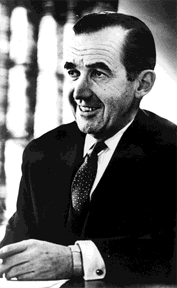
Edward R. Murrow was the most influential broadcast journalist of his generation, the pioneering reporter whose courage and integrity set the standard for American broadcast news. Born in North Carolina and raised in Washington State, he joined CBS in 1935 and was sent to Europe, where the rise of fascism and the outbreak of war gave him the great subject of his career.
Murrow made his name with his dramatic radio broadcasts from London during the German bombing of the Blitz. Speaking live from rooftops as the bombs fell, opening with his signature "This is London," he brought the reality of the war home to American listeners with vivid, unflinching reporting that helped shape public opinion before the United States entered the conflict.
After the war he moved into the new medium of television, where with his producer Fred Friendly he created the influential documentary series See It Now. His finest hour came in 1954, when he used the program to challenge the demagoguery of Senator Joseph McCarthy, a brave broadcast that helped turn the tide against the senator's anti-communist witch hunts.
Murrow worried that television was squandering its potential on triviality, and he warned famously that the medium could illuminate and inspire only if people were determined to use it so. He left CBS to head the United States Information Agency under President Kennedy. A lifelong heavy smoker, he died of cancer in 1965, revered as the conscience of his profession.